The House of Commons Library produces excellent research briefings on topics relating to current affairs and matters of interest to MPs and their staff.
Some of the latest briefings include:
Objecting to gambling premises
NHS key statistics: England
Changes to automatic prisoner release dates in England and Wales
Financial markets: Economic indicators
e-petition: remove sentence reductions for guilty pleas in controlling and coercive cases
Inflation international comparisons: Economic indicators
Complaining about UK Government departments or public bodies in England
Adult social care reform in England
Electoral Commission strategy and policy statement
Time: 1400 – 1530 Date: Thursday 24 September 2026 Location: Online via MS Teams
Join us for this extended casework forum session which aims to bring you essential tips, tricks and advice on how to effectively manage casework. With the authors of the Library’s Guide to casework and W4MP’s accompanying Casework guide on hand, we will also have guests from a variety of other useful Parliamentary services available to answer your questions.
This session will give you the change to share your experiences, get advice from fellow caseworkers and learn about other services which might help make the vital work you do a little easier.
Factiva is an online searchable news and alerts service which aggregates content from both licensed and free sources. These include UK national and regional newspapers, foreign newspapers, and UK and international journal titles. As well as setting up your own search terms, you can search within a particular industry, geographical region, or within regional publications.
You could set up an alert to notify you every time your Member is mentioned in the press, or if there are mentions of a particular topic of interest. Alerts can be delivered immediately or in digest form.
The House of Commons Library runs monthly training which will provide an overview of functionality, including navigation, searching for news on key topics or in key sources, and output options.
Time: 14:00 – 15:00 Date: Wednesday 19 August 2026 Location: Online via Teams Booking: book via ACT
We’ll be joined by staff from the Housing Ombudsman and Library subject specialists Online booking closes 90 minutes before the forum meeting. To request a place after online booking has closed please email LibraryTraining@parliament.uk
There is a lot of useful guidance, support and training available for MPs and staff via MMSST and Parlinet, and this note does not replace the guidance from the Speaker’s Steering Group on AI in Parliaments. We hope it provides additional help and information.
The use of AI, however broadly or narrowly you define it, has clearly exploded over the last few years since the release of OpenAI’s ChatGPT, and many people now use it for a variety of things. It has rapidly become a part of everyday life, with lots of offices using it to help with administrative and creative tasks. As many different chatbots, LLMs, and applications become more easily accessible this has started to influence almost every workplace, including the offices of MPs in Westminster and in the constituency.
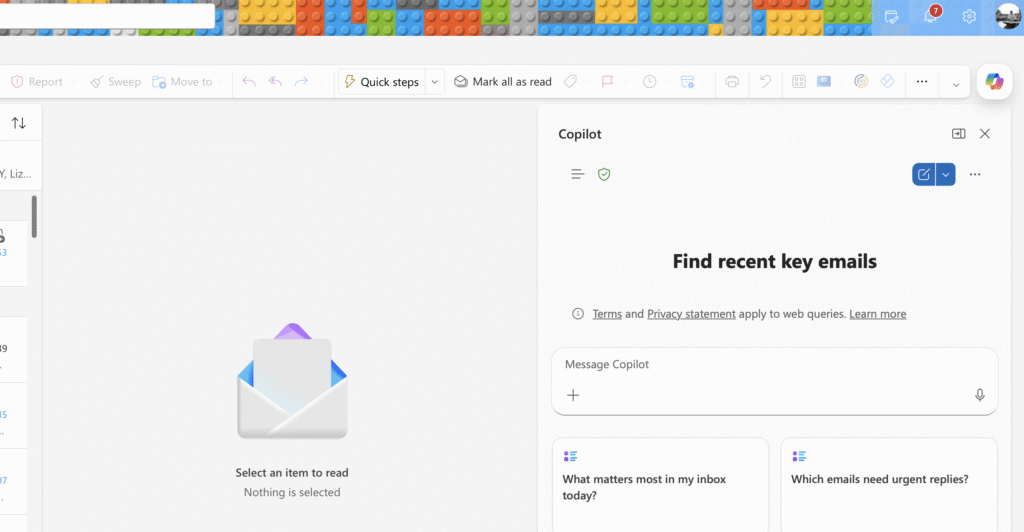
AI isn’t going away, and Parliamentary email accounts already come with Microsoft Copilot Chat built in. As it becomes more common MPs and their staff will want to use these tools and explore how they can support their work, as parliamentary offices often have to manage large volumes of administrative tasks and correspondence while working within time and resource constraints and these seem well-suited for AI-based automation.
When used appropriately, AI tools like chatbots can help routine tasks be done more effectively, such as summarising lengthy documents and helping with organisation, allowing time to be allocated elsewhere. However when using these tools, the focus should generally be on using themas an assistant and not as a replacement, making sure users are maintaining responsibility for all actions and outcomes.
There are good administrative reasons for this, such as the fact that these systems can get things wrong. And there are even greater legal and reputational reasons for making sure that an actual person is always in control and accountable. Recently some MPs faced scrutiny after they were accused of using AI to help write their speeches after Zoe Crowther of PoliticsHome published a chart showing that the phrase ‘I rise to speak’ was being used a lot more often in the Commons, and speculating that this was because ChatGPT was being used to help write them. The ensuing debate showed that while the use of AI can be seen as acceptable in some forms, in other areas it is heavily criticised by members of the public.
Parliament does not ban the use of AI, instead it encourages those to use it cautiously. The current advice recognises the risks and also the benefits it can provide, while reinforcing the idea that AI should support work and not replace human judgment. MPs and their staff must be responsible for all AI produced work and decisions made with its guidance. Therefore any information produced must be double checked and verified before using it internally or publicly.
What the current guidance says
The guide also highlights the importance of data protection when using third party AI models. Warning against inputting personal or private information unless approved, as it could potentially be considered a breach of data protection, such as breaching the GDPR.
There are also concerns over how information and data are stored and used, as users have very little to no control over how it’s held or whether information could be used to train future models. This also causes cybersecurity risks as systems can be compromised by third parties in data breaches.
Microsoft Copilot Chat is a general-purpose AI productivity tool that can help with tasks such as summarisation and analysis is available to all Parliamentary network account holders and is protected by Microsoft Enterprise Data Protection. That means you can use it for Parliamentary business.
The guidance issued says: When you’re signed in with your parliamentary account and using Copilot Chat within Parliament’s secure Microsoft 365 environment, your data is protected. You can use Copilot Chat to interact with sensitive information—including material marked Restricted or Highly Restricted—for tasks such as summarising, redrafting, analysing, creating new content, or working with transcripts and recordings. Prompts, responses, and uploaded documents are encrypted and are not used to train language models.
Parliament also acknowledges that AI models and technology are constantly evolving and adapting, so the rules and guidance will have to adapt and be updated to keep in line with potential changes and technological advances that are made in the future.
After the PoliticsHome post around the phrase ‘I rise to speak’ mentioned above the Pimlico Journal wrote a longer article looking at how recognisable language patterns associated with LLMs are often regurgitated in the text it creates, making it potentially easy to spot and found several examples of how telltale phrases were appearing more frequently in speeches made by MPs with sudden spikes of particular sentences and phrasing occurring since the creation of publicly available LLMs.
The article speculated about several speeches it suspects of using AI generated tools, leading to scrutiny and complaints made by others who believe AI should not be used in the creation of speeches made in Parliament. Even if these claims are inaccurate, it shows how journalists and commentators are paying closer attention to the potential use of AI by MPs.
Regardless of whether AI has been used or not, the accusation of heavy reliance on AI could be a reputational risk, so MPs should be aware that certain people are on the lookout to identify those using AI. Therefore, if you plan to use LLMS you should be prepared for this and potentially be ready to admit and defend the specific use, if they have indeed used it. For example MP Mike Read defended his use of AI on record, one of the only instances in Parliament so far despite its widespread usage.
What people think
Public opinion on the use of AI in politics is often mixed and more nuanced than strictly anti or pro AI. Recent studies from the University of Brunel revealed that around 80% of UK respondents did not want AI to make political decisions over MPs. Similarly, other research done in America showed that 71% said they would like a politician less if they discovered that AI wrote their speeches. Despite this, many are not completely anti technology and acknowledge its helpfulness when used for research and data analysis. But the public’s view is that political judgment must remain human. This suggests that people will distinguish between using AI for administration as a practical tool compared to using it for political judgment and messaging.
One explanation for this could be that a political speech is supposed to be a reflection of the beliefs held by the speaker and should be their personal judgment. As a result, many view AI speeches negatively and find them to be less authentic, even if the content of the speech is true. While the public is not entirely against it being used, transparency appears to remain an important issue. Potentially, people may be more open to accepting AI assistance if MPs disclose their usage.
For an interesting perspective on disclosure, Article 50 of the EU AI Act introduces transparency obligations in four situations one of which is when AI creates deepfakes or text published on matters of public interest. A speech in Parliament would certainly count.
See https://artificialintelligenceact.eu/transparency-rules-article-50/
Using AI in the office
MPs should have their own internal policies surrounding AI within their offices, such as setting clear boundaries on which types of AI use are permitted. There is a useful draft policy for MPs offices on Parlinet, which gives a starting point and outlines the main areas to be covered.
Offices might use AI for administrative tasks while choosing to prohibit the use in areas that require significant human judgment. Through adopting a clear distinction between assistance and authorship, some offices may also choose whether or not to voluntarily disclose their potential use of AI, encouraging staff to keep records of when it has been used. Internal office policy issues that you may want to decide on could be,
Our general advice is to use AI deliberately and carefully, always being aware of the weaknesses and strengths of the tools you are using, and to be able to explain and justify your use if asked. As with all speeches and publications there should be thorough reviews and fact checking before anything is published but if AI has been used to assist you may want to do deeper checks, cross referencing further as AI can often “hallucinate” (ie make up) facts and figures.
There’s also a need to edit things carefully. LLMs can often create paragraphs that feel very generic and may not have the natural cadence of a person when spoken out loud, despite it reading fine on paper. It may not fully convey important or personalised points needed, so adjustments and personalisation’s should preferably be made to help with the flow. Because AI should never fully replace the own words and ideas of an MP, if someone is reading a speech, they should be able to know the context of what they are talking about.
If you are are worried about being accused of using AI falsely, some measures can be taken. For example, there are lists of specific tells that are actively hunted in speeches. So one of the ways that false AI accusations can be avoided is through avoiding certain types of phrases. There are also online AI detection tools you can run content through, but AI detection tools are not always reliable.
Benefits of AI
There are certain tasks where using an AI assistant is seen as more reasonable and appropriate, provided there are still checks and balances.
For example,
research and briefing – AI can help quickly summarise lengthy reports and research. This can help staff save time and identify key themes and ideas.
compile information and cross reference – it can help find new sources and gather data, helping to identify trends and compare different documents, but must not just be taken at face value.
case work (in some circumstances) – drafting template responses for high volume enquiries that are on the same topic as well as identifying common issues and categorising by topic.
administrative tasks – scheduling and management, summarising meeting notes, proofreading, formatting documents and draft action lists and schedules.
It is important never send an AI draft without reading it through!
Best practices
Before using or sharing AI created content staff should check,
Can you verify the claims made?
Is confidential or sensitive information included?
Are you happy to take accountability for the choices the AI has made?
Does it require personal judgment instead?
Would you comfortably explain or defend the use publicly?
Red lines
AI can also potentially exhibit certain biases based on the large amount of media and content consumed during its training. AI does not have the capacity to take responsibility for its output, so while AI has its uses there are certain situations where it should not be utilised.
voting and political decisions- AI should never make political choices or influence an MP’s decision. Decision making and voting must remain the responsibility of the democratically elected individuals.
Public messaging- statements and messaging should reflect the ideas and beliefs of the MP authentically. Any AI use should be carefully reviewed and managed.
Correspondence that requires humanity and personal judgment- replies to sensitive topics in casework should be handled or significantly adapted by a human as AI cannot provide empathy and understanding.
Confidential information- classified information or personal data must never be input into unapproved AI systems,
“A computer can never be held accountable. Therefore a computer must never make a management decision” – IBM training manual
Even though this quote was written before the creation of AI, it is still a relevant debate about the use of AI and its power in decision making especially related to politics as AI can create convincing content but it can never take responsibility for its decisions and output in the same way a person can.
Using other AI models
The parliamentary guide covers Microsoft Copilot Chat as it is currently available to all those with a parliamentary account. Copilot Chat is designed to retrieve information and help with summarising and generalisation, but it cannot retrieve information from other Microsoft applications.
There are many different AI models and tools out there. OpenAI’s ChatGPT, Anthropic’s Claude, Google’s Gemini and Perplexity are all commonly used, and there are also many more powerful tools like Claude Code and ChatGPT Work which can be used to automate complex tasks and are far more than chatbots.
When considering them staff should ensure that the models they choose align with the guidelines. Issues you may wish to consider are.
What tools the AI model is best equipped for
How data and information entered is stored and used in future
Accuracy and reliability
Privacy and security protections
The technical skills needed to operate the tool effectively and the ongoing effort to maintain it
In particular, data protection cannot be guaranteed for any use of tools where you sign up under the standard contractual terms. Using these tools for data analysis for publicly available datasets would be fine, pasting a constituent email would not be.
Human Authored?
At the moment no official rules demand the disclosure of use AI however as the use of AI becomes more common in work environments, internal and public questions surrounding openness and accountability are likely to increase.
One recent development is ‘Human Authored’, a certification and labelling scheme used to mark books whose text was written by human authors rather than generated by AI, created by the Society of Authors (UK) and the Authors Guild (US). Using it means thatthe text is the author’s own intellectual creation, produced through human skill, labour, and judgment with at most a minimal use of AI for spelling/grammar checking or indexing.
While it was created for authors and publishers, the key principles could potentially be applied to parliamentary work. This initiative is a response to public concerns surrounding the use of AI. The scheme is designed to give clarity and certainty that a piece of work is human authored, rather than being created by an AI model. Thereby aiming to provide assurance that humanity is central to the creation of the final product. It emphasises transparency, allowing individuals or organisations to demonstrate when work has been produced without significant use of AI tools, reinforcing accountability and maintaining public trust in a world where AI content is becoming harder to identify.
Ultimately, it is up to the MP to make their own decisions and judgement around what they permit and if they want to disclose. But AI is likely to become a commonly used tool in parliament and those that use AI should focus on how it can assist rather than replace while maintaining responsibility for the outcome of what’s produced.
Sources and Further Reading
An example AI office policy template is available for Members of the House of Commons and their staff. The example policy provides guidance on the safe and appropriate use of AI in Members’ offices and establishes a shared understanding of expectations for AI use.
Prophecy: Prediction, Power, and the Fight for the Future, from Ancient Oracles to AI (2026 by Swift Press (London). The book traces the history of prediction from ancient oracles to modern algorithmic forecasting, arguing that the primary function of prophecy has always been power over others rather than genuine knowledge of the future. Véliz contends that AI-driven prediction systems — governing access to loans, jobs, housing, and healthcare — strip individuals of agency and pose a threat to democracy.
Cory Doctorow: The Reverse Centaurs Guide to Life After AI
The House of Commons Library has created an interactive dashboard shows deprivation data for constituencies and small areas in England and you can find it here: Constituency data: Deprivation in England
Join Hansard reporters for a 90-minute session in which we explain how we accurately report Members’ speeches and the proceedings of Parliament. We talk about who are our readers are, the challenges of parliamentary reporting and which are the most popular debates, and we finish up with a tour of our offices and where we sit in the Chamber to best see all the action.
We are holding sessions on the mornings and afternoons of Tuesday 21 and Tuesday 28 July, at 11 am and 1.30 pm. You don’t need to have any prior knowledge of Hansard to come along, and we welcome staff from all parts of the House.
This talk will analyse the decisions made on local government reorganisation in March 2026, and the implications of any developments since. It will then reiterate the timetable for the implementation of the policy. It will also trace the implications for Government decisions on the remainder of two-tier areas in England.
The London and South East roadshow has been rescheduled for Thursday 10 September 2026.
You are invited to attend the upcoming roadshow event for London and South East offices. The event will be delivered by the Members and Members’ staff Services Team (MMSST) in the House of Commons. We really hope that you will be able to attend.
If you have already signed up, you will not need to re-register for the new date; MMSST will shortly send you a new calendar invitation.