Coronavirus: Returning to Work

Standard

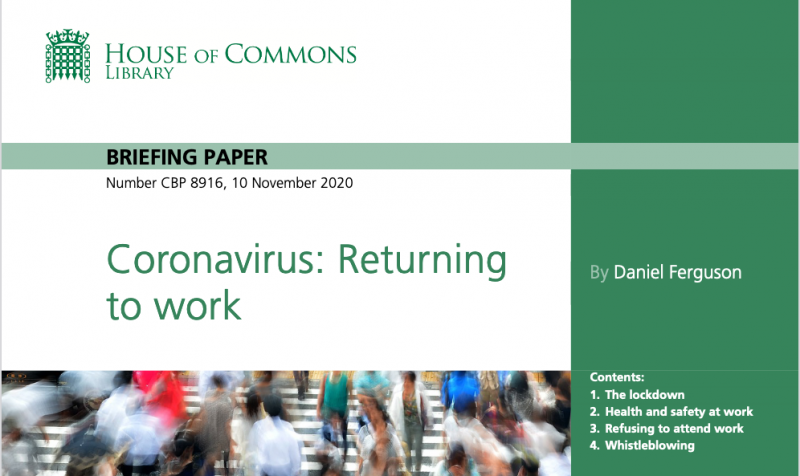
The Commons Library has published a Briefing Paper discussing issues relating to returning to work. It provides an overview of relevant health and safety law and a discussion of Government guidance on working safely in the context of Covid-19. It also includes a discussion of the positions in Scotland, Wales and Northern Ireland.

This is a fast-moving area and the paper should be read as correct at the time of publication (10.11.2020).


Read the Library page about the report

Download the report (PDF)

UK terrorism threat level raised to ‘severe’

Standard

Please note that links to the old Parliamentary intranet have been removed as of October 2023. Please use search on ParliNet to find relevant current details, if available.

https://parlinet.parliament.uk/house-of-commons-members-staff/

The UK’s terrorism threat level has been raised from “substantial” to “severe.  You can learn more about this on the BBC News website here: https://www.bbc.co.uk/news/uk-54799377

Please make sure that you read the guidance on the Parliamentary intranet

and read the ‘Run, Hide, Tell’ guidance

Help with your office technology

Standard

Whether yours is a new office, or a long-standing one, the Parliamentary Digital Service (PDS) can help you to set up your office technology.

You are entitled to computer equipment loaned to you by Parliament for the duration of your MP’s term and PDS can also provide a broadband service for your office.

They also provide comprehensive helpdesk support, which is available 24/7 except for Christmas Day and Boxing Day.  They can help with:

  • Computers and tablets – both hardware and software;
  • Printers;
  • Business Broadband (please not that this does not include television or telephone services);
  • Telephones.

For more information on the Parliamentary Digital Service, please see our guide here: https://w4mp.org/w4mp/w4mp-guides/whos-who/pds/

It’s Parliament Week..

UK Parliament Week Website
Standard

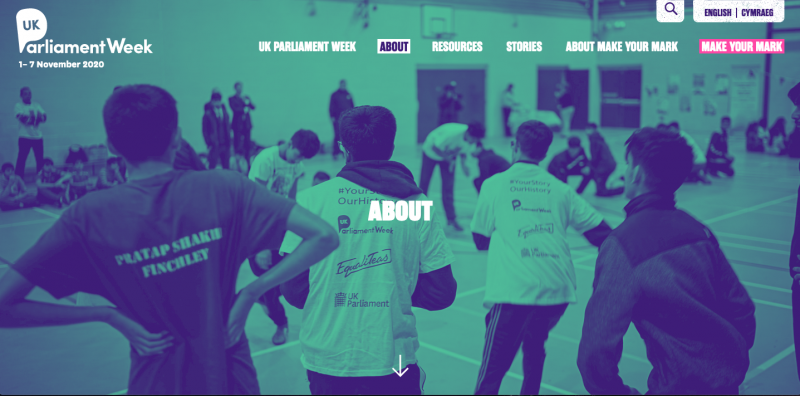
UK Parliament Week is an annual festival taking place from 1-7 November, that engages people across the country with their UK Parliament, explores what it means to them and empowers them to get involved.

This year marks ten years of UK Parliament Week. It is a great opportunity to be part of a thriving democracy and look ahead to the next 10 years, thinking about what issues are important to you and how you can work with the UK Parliament to bring about change. Community groups, local organisations and schools representing every constituency across the United Kingdom have already signed up to be part of the conversation.

Last year, over 1.2 million people took part in UK Parliament week in every nation and region of the UK, alongside  countries all over the world.   Already so far this year over 8,000 activities have been organised across the length and breadth of the country for this upcoming UK Parliamentary Week’s festivities. Over the past decade people from across the country have set up Q&A sessions, launched petitions, created political videos and content, held debates and even organised visits to their local MP to mark the occasion

In the meantime, if you’re interested in getting involved at home, at your workplace or planning activities with a local school, then the organisers of UK parliamentary Week have provided tons of brilliant resources and tips that can be found on their website.

Verification of Social Media accounts

Standard

The Members’ Security Support Service (MSSS) is able to assist you with getting your Member’s social media accounts verified.  This will mean that a blue tick will be shown against the username of the account.

Why is this important?

Simply put, it shows that you are who you say you are.

MPs are often the subject of fake or imposter accounts, and by getting the account verified, the public can be assured that it genuinely is the MP’s own account and not an impersonator.  It also makes it much easier for social media platforms to take action against fake accounts.

Unfortunately, there’s nothing that can be done about parody accounts which are clearly identified as such.

Find out how to contact MSSS via ParliNet.

Face Coverings on the Parliamentary Estate

Man wearing a mask
Standard

(as of October 16)

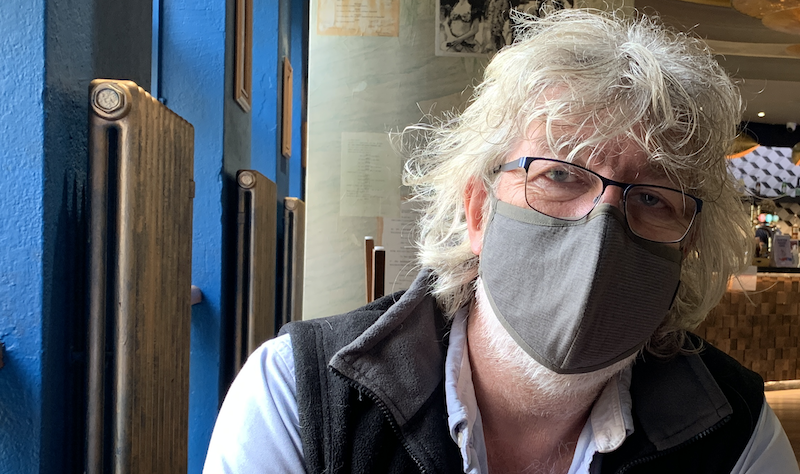
Posters are now in place to strongly encourage all colleagues to wear face coverings when moving around the estate and in areas where social distancing is difficult. Two metre social distancing must continue to be followed wherever possible.

Please be mindful that some people are exempt from wearing face coverings for health or disability reasons.

Before putting on a face covering you should wash your hands thoroughly with soap and water for 20 seconds or use hand sanitiser.

A face covering should:

  • cover your nose and mouth while allowing you to breathe comfortably
  • fit comfortably but securely against the side of the face
  • be secured to the head with ties or ear loops
  • be made of a material that you find to be comfortable and breathable
  • ideally include at least two to three layers of fabric

Face coverings continue to be provided from Hall Keepers lodge in the Palace and the 1st floor reception in Portcullis House.

Free online talks and tours of Parliament

Standard

Please note that links to the old Parliamentary intranet have been removed as of October 2023. Please use search on ParliNet to find relevant current details, if available.

https://parlinet.parliament.uk/house-of-commons-members-staff/

As it’s not possible to have physical tours of Parliament at the moment, why not book a free online talk or tour?

Topics range from the historic furniture collection, to how Parliament works, to the Gunpowder Plot.