
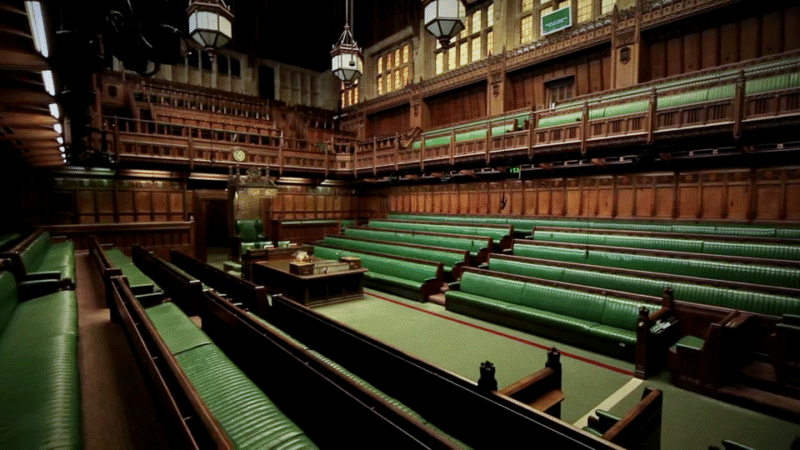
The Restoration and Renewal (R&R) Programme is responsible for planning and carrying out the extensive and necessary work to refurbish the Palace of Westminster. See the Parlinet pages for a comprehensive overview of the R&R Programme and its work for members of the parliamentary community.
Why is the Restoration and Renewal project needed?
The Palace of Westminster requires significant restoration and modernisation. These vital works have been delayed for several years, with the last major restoration works taking place between 1945 and 1950. As a result, many of the fittings within the Palace are unsuitable. The heating, ventilation, water drainage and electrical systems are extremely outdated, creating a significant risk of fire and floods.
These systems and the high levels of asbestos throughout the building pose an unnecessary risk. Lack of maintenance and pollution are also causing extensive corrosion to stonework and drainpipes, resulting in damage to ceilings and other fittings. Parliament says there have been 36 fire incidents, 12 asbestos incidents and 19 stonemasonry incidents since 2016.
The current ‘patch and mend’ approach costs 1.5m a week and tackles only the highest risk problems and is no longer sustainable, as the rate at which the work can be carried out is slower than the rate at which the building is deteriorating
What options have been suggested for this project?
- Enhanced maintenance and improvement+: This option would involve Parliament staying largely in place with work being carried out in phases with different parts of the building being closed and refurbished one at a time. This approach could take up to 61 years and cost approximately £39.2 billion
- Full Decant: Both Houses would temporarily vacate the Palace completely. The work could take up to 24 years and could cost approximately £15.6 billion. Risks to the continuous running of Parliament would also be significantly reduced.
The Restoration and Renewal Client Board’s report,
The Proposals published in February 2026, concluded that major restoration can no longer be delayed. It sets out the condition of the building, the available options, and its recommendations for the next steps (Delivering restoration and renewal of the Palace of Westminster: the costed proposals)
- The Palace is in serious condition- the report states that there are significant electrical, plumbing and mechanical issues throughout the building
- Reduce the options to two- The report recommends continuing work on only two long-term options a full decant and an enhanced maintenance and improvement approach (EMI+)
- Immediate action is needed- The report says Parliament has reached the point where major restoration work cannot be postponed any longer. It recommends beginning preparatory work now rather than waiting several more years.
- Start a seven-year Phase 1- The report recommends approving an initial seven-year programme, capped at £3 billion, to prepare for the main restoration.
- Full Decant is better value- Although the report does not make a final decision it states that the full decant costs significantly less and takes less time
- Benefits beyond restoring the building- it would improve safety as well as support and create new jobs
The report concludes that restoration is essential as the Palace of Westminster is too important and too deteriorated to leave as it is and delays will only increase costs and the risk of major failures. It recommends starting a Phase 1 programme of preparatory work immediately, while developing the two remaining viable options with MPs and peers expected to make a final decision on the preferred restoration method by 2030.
What does this mean for MPs and staff?
- Parliament would continue to function- The House of Commons and House of Lords would still meet, debate laws and hold the Government to account
- Temporary relocation- If the Full Decant option is chosen, MPs would move out of the Palace of Westminster and work from temporary debating chambers and offices while restoration takes place.
- EMI+ option- phased works with MPs remaining in the Palace but prolonging the programme
- Changes to working practices- Some teams may need to work in different locations or adopt new ways of working during the project.
- Training and support- Staff would receive support to help them adapt to temporary workplaces and any new systems.
The current recommendation is that, if Parliament agrees to a Full Decant, temporary accommodation for both Houses will be provided close to the Parliamentary Estate to minimise disruption while maintaining security and keeping costs under control.
Richmond House has been identified as the preferred location for a temporary House of Commons Chamber and office accommodation, while the QEII Conference Centre remains the preferred temporary location for the House of Lords. The temporary chambers will closely resemble the existing debating chambers, with similar layouts, seating arrangements and division lobbies, although they will be less elaborate than the current historic interiors.
Members of the public will still be able to watch parliamentary proceedings and meet their elected representatives, although some ceremonial events may need to be adapted or held elsewhere. Overall, the aim is to ensure Parliament can continue to operate effectively while the Palace of Westminster undergoes essential restoration work.
What would a renovated Palace look like?
A renovated Palace would serve as the continued home of the UK Parliament as well as an important UNESCO World Heritage Site. It would contain all the services needed by a modern and accessible parliament, with safer access for those who work in and visit it.
The restoration would reduce the current hazards and would involve:
- Complete replacement of the antiquated heating, ventilation, electrical, water and drainage systems
- Installation of new fire safety systems
- Safe removal of asbestos
- Significantly improving disabled access in the Palace, which does not currently meet modern standards
- Improving health and safety standards
- Extensive conservation and renewal of stonework
- Repairing the 3,800 bronze windows in the Palace
- Tackling the Palace internal plumbing requirements and pipework and guttering externally
- Replacing the sewage ejector system, which was installed in 1888 and is still in use
- Installing information and communication technology necessary for a 21st century Parliament
- Repairs and conservation work to the historic interiors which cannot be carried out between sittings of Parliament.
- Making the Palace more resilient against future maintenance problems and climate change.
- Improving the palace’s energy efficiency.
Links
The recommended way forward | Restoration and Renewal
National Audit Office report on the project (Jun 2026)
Delivering restoration and renewal of the Palace of Westminster: the costed proposals
The restoration and renewal pages on Parlinet
UK Parliament, CC BY 3.0